Friday, June 25, 2010

New Restrictions on Gill Nets Not Working! NCDMF Director Shuts Down Core Sound Large Mesh Gill Net Fishery; Too Many Sea Turtles Entangled, 4 Killed

With the ink barely dry on the settlement with the Karen Beasley Sea Turtle Hospital, and with new gill net restrictions in place, the NC Division of Marine Fisheries shut down the large mesh gill net fishery in Core Sound today. This came as a result of too many sea turtle entanglements that resulted in the death of four sea turtles. Dr Louis Daniel issued a proclamation today declaring the season closed until September 1, 2010.

Why didn't the new restrictions work? Why didn't the shallower nets of only 15 meshes, with no floats, and shorter shots of only 100 yards not protect these endangered turtles? Why aren't these gill nets target specific as their proponents argue on their behalf?

The answer is simple, and all of us who live here on the NC Coast know it; gill nets are indiscriminate, underwater walls of death, and the only answer to stopping by-catch (by-kill) is the removal of gill nets from our coastal waters forever!

It is time for North Carolina to join South Carolina, Georgia, Florida, Alabama, Louisiana, and Texas in the 21st century and end this archaic and inhumane method of fishing in our coastal waters! How much more can we tolerate? When will the citizens of NC stand up and say enough is enough.
How much longer can NC Senator Marc Basnight and his cronies protect this insanity?

Gill nets have no place in modern day commercial fishing! The time has come for their end here in North Carolina, period!

Saturday, June 5, 2010

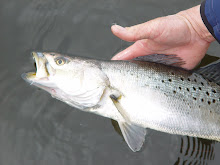
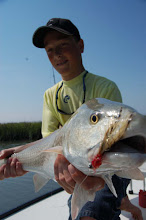
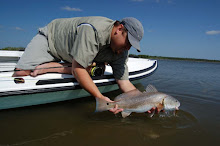
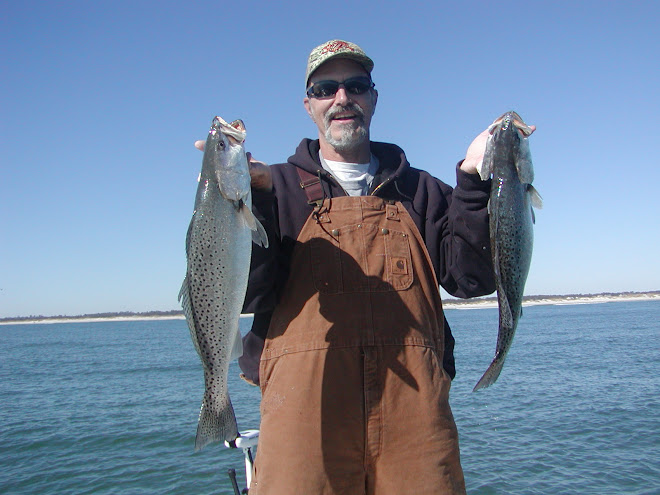
Game Fish Status for Speckled Trout and Red Drum in North Carolina!

The following game fish "primer" was developed in the Spring of 2009. These two fish are far too valuable to our NC economy as sport fish to not consider all the benefits that would be realized by removing them from commercial harvest and sale.

Since these two fish are the primary targets of recreational saltwater anglers here in NC, the very elimination of "user conflict" alone is reason enough alone to seriously consider game fish protection for both species. Just and fair compensation to commercial fishermen for determined time frames could be paid for with recreational saltwater license monies for years to come.

If commercial fishing interests here in NC would consider the benefits of removing the user conflict on these two fish with game fish designation, greater support from recreational fishermen for commercial fishing would be accomplished!

Game Fish Act Primer

Due to the recent events in which a petition for rule making was presented to the North Carolina Marine Fisheries Commission on behalf of the Spotted Sea Trout, and was rejected by the commission, and the fact that the Red Drum is our state fish and is in a state of “recovery”, we feel that we are obligated by our concerns to seek a more expeditious remedy on their behalf. Prompted by the welfare of the resource, we are subsequently forced to intervene through the avenue available to us through our North Carolina General Assembly by introducing a bill that would declare the Spotted Sea Trout and the Red Drum as Game Fish.

This act would prohibit the sale, purchase, transportation for sale, barter, or any other means of exporting for profit, the Spotted Sea Trout and the Red Drum. By enacting this statute, the status of these two fish would be protected for years to come and insure the viability of the fishery and the tremendous values that they posses both recreationally and economically to the State of North Carolina and its citizens.

Since the very first Game Laws were enacted in North Carolina in 1935, management of game animals has been an effort of the government to protect the natural resources through allocation of certain animals to certain user groups for the overall well being of certain species. This action was first seen in the early days of waterfowl hunting on the Pamlico Sound when commercial hunters slaughtered waterfowl by the tens of thousands. The wildlife agencies of that day determined that species survival along with economic impacts deemed it necessary to allocate the hunting of waterfowl to recreational hunters only. The concept was sound and has been very successful both biologically and economically.

Most of our Southern Coastal states have enacted similar or more stringent statutes in their coastal waters to protect both species of these fish. Texas was the first to act by declaring game fish status for both the Spotted Sea Trout and the Red Drum in 1981, in addition to banning all forms of gill netting in all coastal waters. Other states have followed suit with the same or more stringent acts, such as Louisiana, Alabama, Florida, Georgia, and South Carolina. The precedents set by our neighboring coastal states require us to examine the positive impacts on both the protection of the species, and the tremendous financial boons that have occurred as a result of these actions.

Due to the fact that the Spotted Sea Trout and the Red Drum can be pursued year round by recreational fishermen, the recovery of the fish and the tremendous economical boost as a result in these states has been undeniable. Because of its vast coastal water sounds and tributaries which are unique to the whole nation, North Carolina would soon establish itself as the premier sport fishery state for these two fish in the whole country. While saltwater recreational anglers generated $2.5 billion in sales to businesses here in NC in 2006, Florida’s anglers were generating over $15 billion in sales that same year! Much of their success is due to the stringent laws they have in place to protect these two fish.

Management issues regarding user conflict between competing groups have been eliminated as a result of these laws, enabling marine enforcement agencies to concentrate on more serious issues that they face. Survey programs in these states have shown increases in population abundance, spawning success, angler participation, angler catch rates, and mean size of fish landed. Increase in abundance here in North Carolina is of critical importance to insure the presence of sufficient stocks to survive severe freeze-related kills.

Texas credits one of the main reasons for the turnaround in their sport fisheries is the ability to control fishing mortality is more easily managed in a “sport rod and reel fishery” than in a “commercial net fishery”.

NC creel limits on the Spotted Sea Trout for recreational fishermen need to be reduced from 10 fish per day to 6 fish per day, in addition to raising the size limit from 12 inches to 14 inches, with only one fish to exceed 25 inches. This will reduce recreational pressure on the stocks and allow greater survival of mature fish for the spawning season. These restrictions would bring NC protective measures up to date with supporting studies, and more closely mirror successful restrictions in place by our coastal neighbors

In 2007 the NC commercial catch revenues on both of these species combined was $882,220.00 state wide. We realize that this number represents revenues that are spread out in our coastal towns to commercial fishermen and their families. We are offering to mitigate those losses of revenues with monies from our saltwater license sales fund for the next three years. This money can be distributed for the buy-back of licenses, gear, and overall lost income. Please keep in mind that our goals are not to stop commercial fishing here in North Carolina. Although many of our coastal neighbors have banned all nets completely from all coastal waters as part of their management plan for all fish, that is not what we are proposing.

Statistics will show that commercial fishing interests in our neighboring coastal states currently have thriving markets. Many of these states have developed significant commercial saltwater aquaculture operations that are producing Flounder, Shrimp, and Pompano to name a few, for commercial sale as a result of this allocation.

In closing, we feel that the time has come for North Carolina to grasp the real value of these two fish, and the tremendous financial impacts that this measure would multiply throughout our entire state-wide economy. Optimum yield has yet to be recognized from the Spotted Sea Trout and the Red Drum for all North Carolinians. We believe that day has finally arrived.

Tuesday, May 18, 2010

NC Marine Fisheries Commission Settles Lawsuit With New Restrictions On Gill Nets; Small Step in Right Direction

Significant change has finally come to NC Marine Fisheries management resulting from a lawsuit filed in Federal Court. In an effort to hide the weakness that the courtroom offers to the stakeholders in our marine fisheries, the NC Marine Fisheries Commission conceded to severe restrictions on Large-mesh gill nets.

Conservation groups have taken notice that legal avenues may be the only avenue to effect serious reform in NC marine fisheries. Since the Marine Fisheries Commission is manipulated by NC Legislators that depend on commercial fishermen for re-election, and since they have enacted legislation to prevent any challenges to the current system, the courts will likely see more activity until the current system is abolished!

Get used to it boys, you asked for it!

The new restrictions will only be as effective as the DMF has ability or the stomach to enforce them. Why would that be a concern? Consider this. In the last ten years, not one single Sea Turtle was reported entangled by a commercial gill netter here in NC when the current permit strictly demands that they be reported.

Now that doesn't mean that turtles weren't entangled. As a matter of fact, quite a few were reported entangled when "observers" were accompanying commercial gill netters on their trips. But not one was ever reported on "unobserved" trips for the last 10 years! Amazing huh?

Observers are "turtle magnets!"

NC's Division of Marine Fisheries claims to have the best data and statistics in the USA. They brag about it, just ask them.

How could the most efficient data gathering agency in the whole country not be alarmed that no turtle entanglements were being reported unless there was an "observer" onboard for TEN YEARS? Maybe they just "missed" that fact, or worse, could they have been looking the other way intentionally?

Certainly one of our powerful politicians wouldn't direct folks to look the other way when his voter base is involved would he?

The citizens of North Carolina no longer trust our Marine Fisheries Commission, and the sooner we take the control of our marine fisheries away from commercial fishermen and their guard-dog legislators, the better!

Tuesday, April 13, 2010

NCDMF/NCMFC Attorneys Move for Dismissal of Sea Turtle Lawsuit

In an all-out effort to keep the public from learning the ugly truth about NC gill nets, the attorneys defending the North Carolina Division of Marine Fisheries and the Marine Fisheries Commission have made a motion for "dismissal" of the lawsuit filed by the Karen Beasley Sea Turtle Hospital.

If gill nets are not responsible for the deaths of thousands of Sea Turtles, why wouldn't the NCDMF and the NCMFC want their day in court to prove otherwise? Why not once and for all show the state of NC and the whole USA how environmentally friendly gill nets really are, and how they are not wasteful, indiscriminate killing machines?

Obviously NC commercial fishermen have learned methods of gill net fishing that all the other states in the south never acquired! Since from NC to Texas, NC and MS are the only 2 states left that still allow the unbridled use of gill nets in coastal waters, NC must be either really smart or really stupid!

We don't believe that North Carolinians are stupid. Most of them just don't really understand what a gill net is, how does it work, and what's wrong with gill nets!

The CFRG is starting a campaign to answer those three questions; "What is a gill net, how does it work," and "what's wrong with gill nets?"

We have prepared a PowerPoint presentation that answers those questions, and will come to your event or meeting wherever you are in the state of NC to make the presentation. It is a powerful and in-depth expose' on the dirty secret of the NC commercial gill net fishery, and the political framework that has protected it for decades!

Please email us to schedule a presentation for your organization in the near future.

Wednesday, March 31, 2010

NC Marine Fisheries Commission Votes to Snub ASMFC, Continue Slaughter of Collapsed Gray Trout Fishery for the Love of Money!

Once again our NC Marine resources suffer at the hands of our commercially run Marine Fisheries Commission. Under the guise of caring about wasted fish, the commission voted to "not comply" with the Atlantic States Fisheries Commission and reduce commercial harvest of Gray Trout to 100 pounds per day per vessel, and one fish per day for recreational fishermen.

The ASMFC could request the US Secretary of Commerce to step in and shut the Gray Trout fishery in NC completely down!

This is exactly what needs to happen to protect this beautiful sportfish! From 1978 to 1990, the commercial fishing fleet here in NC sold over 160 Million pounds of Gray Trout at an average of 32 cents per pound! Now, with no limits whatsoever, they have only harvested less than 200 thousand pounds in the last few years.

Fisheries biologist say the Gray Trout stocks are at an all time low, and what do our NC commercial fishermen want to do? They demand that they be allowed to go catch what is left of them! Even when all the states on the Atlantic Coast voted to do otherwise!

Not only can they make such horrific demands, since they are the "foxes guarding the hen house," they can make their own rules to play by and do as they wish with our fisheries!

This egregious display of blatant disregard for our marine resources gives not only North Carolinians reason for pause, but for our neighboring states on the Atlantic Coast as well.

If there were ever any doubts about the true nature and intent of our Marine Fisheries Commission, they have now all been erased!

It is high time that the current system of marine resource management be overturned and overhauled! Maybe the Feds will step in and help us get it done!

The CFRG sent the following email to every member of the ASMFC on March 26, 2010....

Dear ASMFC Member,

Once again, North Carolina’s Marine Fisheries Commission puts money and profit at a higher priority than the health of a depleted Weakfish fishery. In spite of the intense studies and debate that the ASMFC has engaged in on behalf of Weakfish, NC MFC has decided that they know better and will just thumb their noses at sound, biological fisheries management.

Is it any wonder? Does this really surprise any of you who understand that North Carolina Marine Fisheries are run by commercial fishermen that only understand the price of a fish sold, and not the value of a fish preserved? Many of us here in NC are growing weary of the constant battle to achieve sound fisheries management, and now we must turn to you for help!

Will you help us? Will you do what is right for the Weakfish before it is too late?

Please use the power that is given to you and demand that NC adhere to the Weakfish regulations that the ASMFC supports. If they refuse, please request that The Secretary of Commerce SHUT DOWN completely the NC Commercial and recreational Weakfish fishery until the stocks recover.

Concerned North Carolinians need you to step up and do the right thing, in light of the shameful actions of a politically run NC Marine Fisheries Commission!

Please let us know your feelings on this subject, and thank you for your service on behalf of our Atlantic States Fisheries!

Thursday, March 18, 2010

Atlantic Sturgeon; Another Canary in the Coal Mine? Read Craig Holt's Opinion From NC Sportsman Magazine

Will Our Fisheries Ever be Managed For Fish?
By Craig Holt

Three decisions involving saltwater fisheries occurred during February. One was fairly-well publicized; two flew under the radar.

Each reveal the mindset of fisheries management in North Carolina.

Anglers may know about a Feb. 18 meeting in New Bern, when the N.C. Marine Fisheries Commission held a public hearing regarding a proposal by Dr. Louis Daniel, director of the N.C. Division of Marine Fisheries. Under pressure from the National Marine Fisheries Service to reduce accidental gill netting of sea turtles (and from an impending lawsuit by a turtle-protection group), Daniel offered a temporary May 15-Dec. 15 closure of sections of Pamlico, Core and Back sounds and the Cape Fear River to large-mesh gill nets.

Before an audience of mostly net fishermen, the MFC dropped Daniel’s idea and voted for a proposal tossed out by a commercial fish dealer that would allow gill-net use four days a week.

Earlier in the month, Daniel and N.C. Wildlife Resources Commission executive director Gordon Myers sent letters to NMFS Southeast region director Roy Crabtree. He wanted to know if the two agencies thought Atlantic sturgeon should be listed as endangered or threatened under the Endangered Species Act.

They responded that Atlantic sturgeon shouldn’t have ESA protection and asked for further studies, even though a ban on sturgeon harvests has existed since 1991. Moreover, their responses to Crabtree contained contradictory statements:

“The DMF believes that there is evidence that management measures enacted by the state of North Carolina and the ASMFC are resulting in positive population trends.” (Daniel).

“Recent information from Albemarle and Pamlico sounds suggests that the Carolina DPS (distinct population segments) of Atlantic sturgeon has shown little improvement in size and age distribution since 1991.” (Myers).

We don’t know which conclusion is stranger.

DMF says sturgeon numbers are growing while WRC sees no improvement. Yet both agencies’ leaders don’t want ESA listing for a fish that can’t be caught legally because there are so few of them.

A source also has told us WRC rejected its own staff report that sturgeons should be listed.

After the Feb. 18 MFC vote in New Bern and the letters of Daniel and Myers to NMFS, one conclusion seems inevitable — gill-net use will continue in N.C. saltwater until it’s halted by outside forces.

Of course, commercial fishermen don’t deliberately target sea turtles or sturgeons, but sometimes their nets injure or kill these endangered or threatened species.

The major problem with nets in N.C. waters is timing — the DMF allows them to be set in spring to intercept fish headed for shallow water to spawn (killing fish before they can reproduce isn’t a great idea). Post-spawn-only gill netting could work (and result in more fish), but, as Feb. 18, proved, netters and the state agencies that regulate them won’t accept restrictions.

However, that may prove a dangerous path to follow.

Clearly, economic hardships are squeezing netters. But by refusing any restrictions or adjustments while demanding state agencies be similarly unbending, their lack of compromise eventually may force removal of all nets from N.C. waters.

Tuesday, March 16, 2010

Sea Turtles; "The Canary in the Coal Mine"

In the "old days" coal miners would carry a "Canary" into the mines with them in a cage. If the canary stopped singing, the miners would know that the bird had perished from the invisible, odorless, lethal, Methane gas, and would evacuate the mine!

The NC Sea Turtles are the "Canary in the Coal Mine" for NC marine fisheries!!!

You need to look no further than the Division of Marine Fisheries own website to confirm this. See how the rest of our "fish stocks" are faring here.........

http://www.ncfisheries.net/stocks/index.html

It is time to "evacuate" ourselves from a politically run marine fisheries system here in NC!

Far too long have a handful of coastal politicians stood guard over a mismanaged and corrupt marine fisheries system for the sake of money. Our coastal resources have been sacrificed on the altar of convenience and status-quo for monetary and political gain!

Yes, our Canary in the Coal Mine is dead. Where is the nearest exit?