Sunday, January 31, 2010

Dick Hamilton, Retired NCWRC Chief and CFRG Co-founder Named "Sportsman of The Year"


Dick Hamilton has been named the 2009 "Sportsman of The Year"by NC Sportsman Magazine. In addition to his 37 years with the NCWRC, the magazine noted Dick's involvement with the Camo Coalition, (the NC division of the Wildlife Federation,) and his efforts in creating the CFRG and guiding the group through its first year of engaging NC coastal fisheries issues.
The NC SPORTSMAN story about Dick's award and lifelong accomplishments can be read at the following link........ http://www.northcarolinasportsman.com/details.php?id=1319

Saturday, January 30, 2010

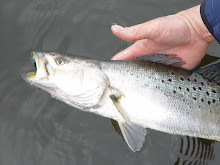
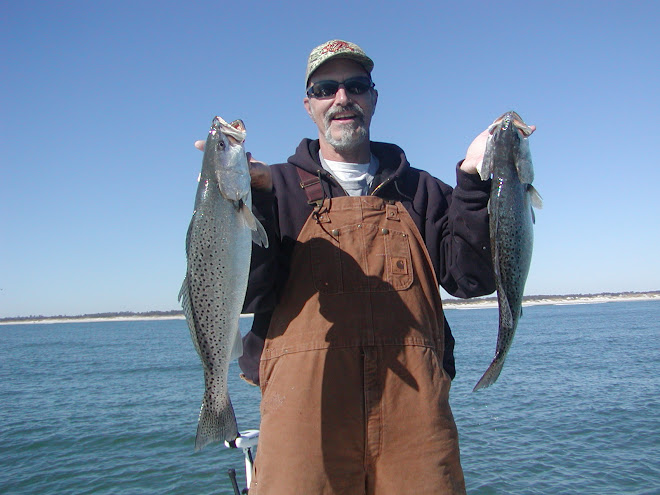
Cold Stun Events Bolster Argument for Game Fish Designation for NC Speckled Trout

Reports of tens of thousands pounds of Speckled Trout being scooped up with dip nets while they were either dead or cold stunned are raising concerns. According to eyewitnesses many trout were dipped at night by fishermen using bright lights to illuminate the stunned fish on the creek bottoms.

Due to the archaic method of reporting fish sales and transactions at the NC fishhouses, it may be months before we actually see the numbers of trout that were harvested as a result of these cold stun events. More importantly, some of these harvested trout may have been taken from "inland" waters where they have "game fish" status, and thereby illegal to sell.

The fact that the Speckled Trout (Spotted Sea Trout) is the number one targeted saltwater sportfish in NC by saltwater anglers, and it is also targeted ferociously in the winter months by commercial netters and giggers in their winter sanctuary creeks, makes the argument for "game fish" status for statewide waters even more potent!

The combination of recreational fishing pressure, commercial netting and gigging, and the natural phenomenon of Cold Stun events, create an ever increasing pressure on the sustainability of this fish that cannot continue.

The commercial harvest of this fish must come to a halt now. The Speckled Trout is a "game fish" in inland waters, and should be afforded this protection throughout all NC waters.

Due to the effects of Cold Stun events, the Speckled Trout historically has never been a dependable source of income for commercial fishermen. In years following Cold Stun events, the revenues generated commercially have been minuscule. Monies from the saltwater fishing license fund could easily pay the commercial fishermen who harvest Speckled Trout to not harvest them.

This concept is not new, as farmers have been subsidized to limit or cease production of certain crops. We have the means and the ability to do the same here in NC with Speckled Trout. The last ten years, the Speckled Trout has only represented .4 percent of the entire commercial harvest values. That's right, less than 1/2 of one percent. Yet the pursuit of this fish by recreational fishermen easily pumps over $50 Million dollars into the NC economy, and that number is growing!

The bottom line is this; The Speckled Trout here in NC cannot stand the combined pressures of Cold Stun Events, Commercial Fishing, and Recreational Fishing. A tough allocation decision needs to be made and made soon.

With the dollars generated by recreational fishing for Speckled Trout, more than enough funds are available to cover the .4 percent needed to subsidize the commercial fishery out of the Speckled Trout business. It just makes plain common sense!

Understanding the fact that NC is the fastest growing state east of the Mississippi River, the increased pressure from recreational fishing will only continue to grow. The dollars generated by this activity is too important to all of NC and especially the coastal plain and coastal towns!

Game fish status for Speckled Trout along with fair compensation to commercial fishermen who would be adversely affected economically is a workable and feasible solution to the problem.

Monday, January 25, 2010

Can North Carolina Stop This? From Here to Texas, Only MS and NC Still Tolerate This!

Enlarge this photo to see the gill net marks on the Dolphin
If this angers or embarrasses you as a North Carolinian, then please email or call both your State and Federal Legislators and tell them that this madness must stop and stop now!

Tuesday, January 5, 2010

REDFISH CAN'T JUMP; Premier Goes on the Road to Charlotte, NC, Jan 29th & 30th

Captain Seth Vernon (Double Haul Guide Service) of Wilmington NC and friends have produced a fabulous documentary about North Carolina's State Fish, the Red Drum, and fishing dynamics surrounding this beautiful sportfish. The film opened to a packed house in Wilmington last week.

The Charlotte, NC premier will occur on January 29th and 30th at THE PARK, 800 Briar Creek Rd., Suite AA506, in Charlotte, NC.

An interview about the movie can be read online on FLY FISHING MAGAZINE at the following link..... http://www.thisisfly.com/

Please see the "trailer" for the film at the link below.........

To see an in-depth look at production of the film, visit the website at.......

Visit Captain Seth Vernon's website at ........

Friday, December 4, 2009

New US Fish and Wildlife Service Report on NC Gill Nets; Waterfowl and Shorebirds Killed


View the entire report at this link......


Sunday, November 22, 2009

North Carolina Sportsman Magazine Op-Ed On Gill Nets Tells it Like it Is!


The problem of more wisely managing N.C. saltwater resources may require a Gordian Knot solution. And it could happen soon.

Students of Greek legend will remember the Gordian knot story — a king (Gordius) hitched his wagon to the temple of Zeus with an intricate knot, one so intricately entwined no citizen could unloose it. Zeus, it was said, declared anyone who could untie the knot eventually would rule all Asia. For years no one could loosen the puzzling knot.

Enter Alexander the Great. He, legend says, simply drew his sword and hacked the knot asunder — and went on to conquer Asia.

For years saltwater anglers have tried to solve the knotty bureaucracy of the N.C. Marine Fisheries Commission and N.C. Division of Marine Fisheries in order to get the agencies to alter policies critics claim harm fisheries, tourism and, ultimately, the state’s economy.

Why? The evidence seems clear. We’ve been bombarded for years with photos of red drum illegally left to rot in nets, sea birds entangled in monofilament and sea turtles caught in the stuff.

The Coastal Conservation Association of North Carolina and the Coastal Fisheries Reform Group have cajoled, petitioned and pleaded with DMF to do something (anything) to protect and conserve saltwater sportfish species from death by nets.

The DMF, it must be noted, is tasked by law (1997 Fisheries Reform Act) with managing coastal fishes for recreational and commercial use. DMF directors quickly refer to their dual responsibilities when it comes to their reluctance to change policies to please recreational anglers (1.2 million) instead of approximately 5,000 licensed commercial anglers.

Meanwhile, reds keep getting caught, creeks are wrapped up in nets preventing access by hook-and-line anglers to spotted sea trout and red drum, ducks and shorebirds become entangled, and endangered/threatened sea turtles keep dying in nylon-encased caskets.

Raleigh’s legislative leadership kills attempts to curtail netting (a bill to give red drum and spotted seatrout gamefish status and protect them from nets never got out of committee this past session. Neither did a bill to protect menhaden from factory ships based in another state).

The DMF’s advisory committees are, to put it mildly, a joke. Intended to offer a facade of fairness, helpful committee ideas never are implemented by a MFC that almost always favors netting.

An advisory committee member told us last week if a proposal would help specks or reds by curtailing netting, a commercial member will say: “We don’t have any data to support that” or “(the proposal) might work down south but not up here.” And the idea dies.

In short, nothing changes when it comes to state-managed saltwater resources. So the next step is, logically, federal intervention.

And that’s what the Karen Beasley Sea Turtle Rescue and Rehabilitation Center plans to do. It will sue DMF and MFC in federal court if, by Dec. 18, 2009, DMF doesn’t remove gill nets from N.C. waters . The last time a 4th District Court judge got involved in such an issue, surf anglers were banned from driving ORVs at OBX beaches because of six birds.

Will the same judge be inclined to wield his Gordian knot sword to DMF/MFC policy to save thousands of sea turtles? Stay tuned.

Tuesday, October 20, 2009

Legal Notice of Pending Lawsuit Given to NMFS; NCDMF, NCMFC Given Sixty Days to Respond


Topsail Island, North Carolina, October 20, 2009

The Coastal Fisheries Reform Group supports action taken today to halt the incidental killing and injuring of sea turtles by gill nets.

The Karen Beasley Sea Turtle Rescue and Rehabilitation Center, of Topsail Beach, North Carolina, has given the National Marine Fisheries Service notice that it will pursue legal remedies in Federal Court against the North Carolina Division of Marine Fisheries and the North Carolina Marine Fisheries Commission. The notice is a prerequisite to any formal legal proceedings based upon the Endangered Species Act, and pertains to the unlawful take of endangered and threatened sea turtles along the entire North Carolina coast. The notice requests that all “gill nets” be removed from all North Carolina coastal waters. If no remedy is found within sixty days then the Beasley Center can file formal legal proceedings.

The sixty day Notice of Intent was filed with all three agencies today.

THE COASTAL FISHERIES REFORM GROUP fully supports this action in light of the “Collateral Damage” created daily by gill nets in NC coastal waters. Sea turtles are endangered, but the carnage and waste of unwanted fish, waterfowl, mammals, and endangered Sturgeon impacted by destructive and indiscriminate gill nets must come to an end now.

North Carolina has almost three million acres of coastal and joint waters and four thousand miles of coastline. It’s high time that North Carolina joins our other southern coastal states in the removal of the destructive gill nets from all NC Coastal waters. From here to Mexico the only states that still allow this archaic practice of gill netting in coastal waters are North Carolina and Mississippi. We have world class universities within two hour’s drive from our coastal waters, yet up until this point science has been stopped at our coastal water’s edge for political considerations.

See the actual notice at this link......
http://www.law.duke.edu/news/pdf/beasleynotice.pdf